

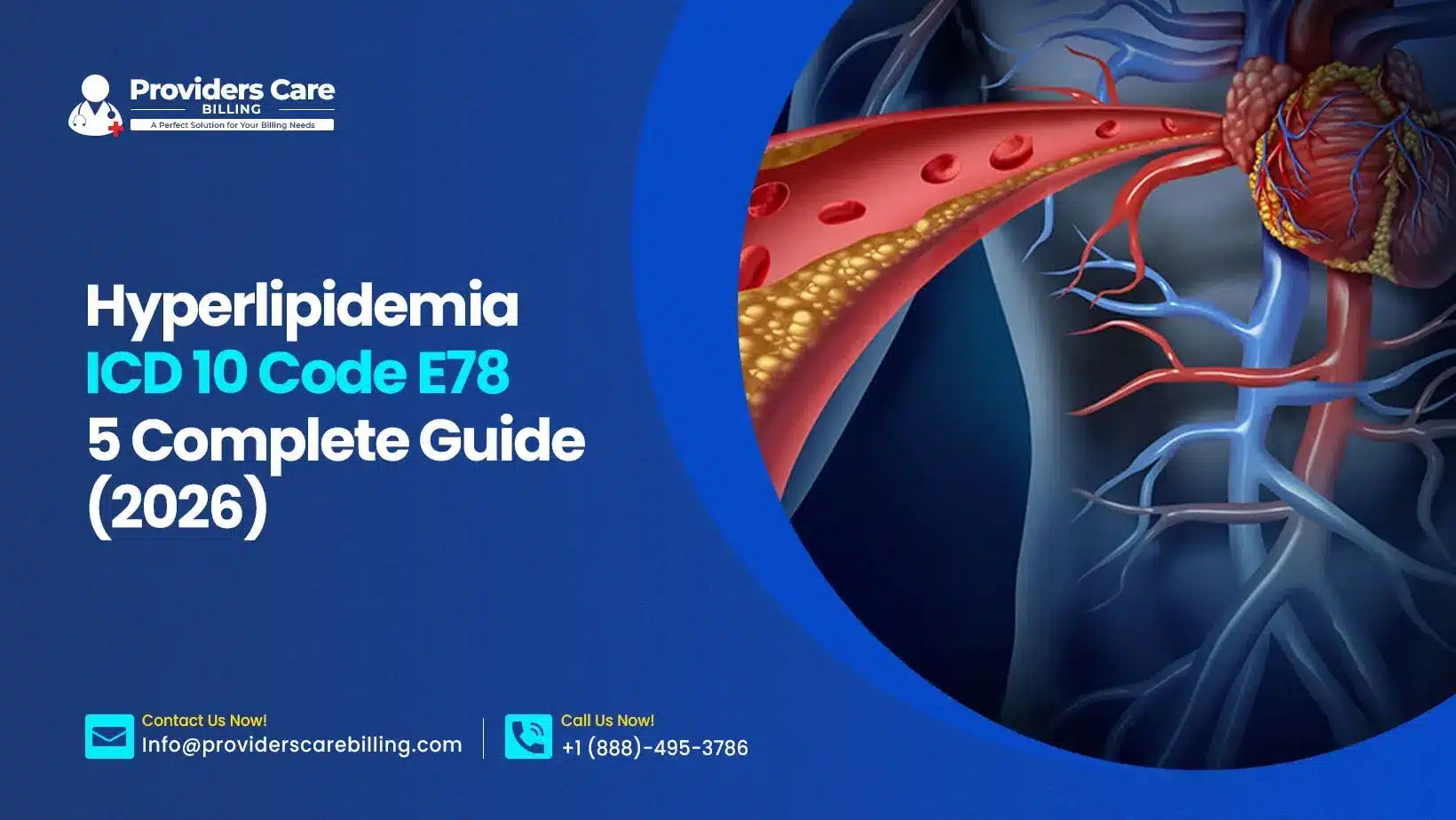
High cholesterol is the cause of diseases of hyperlipidemia. It is a high level of lipids, which are taken as fats in your blood. But it’s a fact that lipids in your body, in the form of cholesterol and triglycerides, perform your body’s functions properly. But when it exceeds its limit, it can lead to more serious health problems like heart disease, stroke, and even pancreatitis.
In this blog post, we will know the ICD-10 code for hyperlipidemia and its relevant sub-codes. Also, we will discuss how accurate coding simplifies medical billing and coding processes both for clinics and physicians.
What is Hyperlipidemia?
It is an irregular increase of lipid levels in human blood. As we know, lipids primarily include cholesterol and triglycerides, both of which are necessary for the body’s proper functioning. However, too much of these substances can lead to various health issues like cardiovascular problems.
There are different types of hyperlipidemia conditions that are mentioned below:
1: Elevated cholesterol
It is due to an increase in the normal level of cholesterol in human blood.
2: Mixed hyperlipidemia
This condition is usually caused due to the increased level of cholesterol and triglycerides.
3: Dyslipidemia
It is a general term which is used to describe abnormal lipid levels. It includes high cholesterol, high triglycerides or even both.
Lifestyle changes such as diet and exercise can reduce the chances of Hyperlipidemia. You can also use medicine for this purpose.
ICD-10 Code for Hyperlipidemia: E78.5
The ICD-10 code for hyperlipidemia is E78.5 and is used for Mixed Hyperlipidemia. This means that a person has an increased amount of both cholesterol and triglycerides.
ICD-10 Code for Hyperlipidemia Unspecified
In some cases, healthcare providers can’t identify which specific lipid is elevated. They can’t determine the exact levels of cholesterol or triglycerides. In such a condition, they use the ICD-10 code for hyperlipidemia unspecified.
ICD-10 Code for Elevated Cholesterol (E78.0)
If any patient has high cholesterol specifically, the ICD-10 code for elevated cholesterol is E78.0. Being more specific than E78.5, it only indicates cholesterol with no elevation of triglyceride levels.
ICD-10 Code for Mixed Hyperlipidemia
When a person has high cholesterol and high triglycerides, E78.5 for mixed hyperlipidemia is applicable. It leads to complications like cardiovascular diseases if not properly managed.
The Importance of Accurate Coding in Hyperlipidemia Diagnosis
The following reasons make proper diagnosis and coding a necessity:
Insurance Reimbursement
Insurance providers rely on precise coding to perfectly process claims. That’s why using the correct code for this condition plays an important role. It helps in the claims approval for treatment and medications. It also avoids delays or denials.
Tracking and Monitoring Health Trends
Hospitals, clinics, and doctors can monitor health trends of hyperlipidemia only with the proper coding. Healthcare providers identify patterns for each patient and improve outcomes.
Improved Patient Care
Using the correct ICD-10 code for HLD (Hyperlipidemia) gives satisfaction to healthcare providers that the treatment plans are according to the specific type of hyperlipidemia the patient has.
Legal Compliance
Accurate coding allows medical professionals to comply with healthcare regulations and prevent errors. As it could lead to audits or penalties.
The E78.5 Diagnosis Code Explained
The E78.5 diagnosis code is not the only related code for mixed hyperlipidemia, you can also use some other ICD-10 codes too.
- E78.0 for cholesterolemia
- E78.1 for pure hyperglyceridemia
- E78.2 for Mixed hyperlipidemia
- E78.3 for hypercholesterolemia
- E78.4 for Other hyperlipidemia
Also, the E78.5 ICD-10 code is for mixed hyperlipidemia and is most commonly used in clinical settings.
How Providers Care Billing Helps with Medical Coding and Billing?
At Providers Care Billing, LLC, we are fully aware of the challenges of medical coding and billing, especially for hyperlipidemia. As experts in medical billing, coding, and revenue cycle management (RCM), we enable healthcare providers to focus on excellent patient care while we handle their administrative work. We offer services in various states across the USA, including Illinois, Schaumburg, California, Texas, New York and more.
You can schedule a Free consultation contact with us today and let us handle the complex details of your billing. You’ll know every detail about our medical billing services and how we can support you throughout the partnership.
Conclusion
In the end, you definitely know everything about the ICD-10 code for hyperlipidemia and its variations. Once again, a widely used E78.5 code for Mixed Hyperlipidemia codes is for patients showing a rise in cholesterol and triglyceride levels. With the right codes, healthcare providers get reimbursed without any delay or error.
Frequently Asked Questions
Why is ICD-10 coding considered most important in healthcare?
For proper treatment and accurate reimbursement, ICD-10 coding is very crucial. After that, it also improves communication between healthcare providers and their patients. They’re more likely to be able to simplify everything with them. Which means that patients can enjoy good health care.
What are the signs of hyperlipidemia?
It doesn’t have clear symptoms, which is why it’s titled as a ‘SILENT’ condition. The minor issues that a person can experience include chest pain, fatigue, etc. But if a person regularly checks their lipid level, then the chances of their potential complication will be reduced.
How can hyperlipidemia be controlled?
The most effective way to control these diseases is to have a healthy lifestyle. If a person does regular exercise, takes medications, and follows a good diet, then they can control it easily.